


Berkshire Hathaway must carry on without Warren Buffett as Greg Abel looks like lead the historic company into the future. Before we dive in, let’s make sure you’re set to receive The Daily Breakdown each morning. To keep getting our daily insights, all you need to do is log in to your eToro account. Interested in more Deep Dive content? Check out our latest research.
Deep Dive
Berkshire Hathaway is one of the world’s largest conglomerates, with a market value above $1 trillion and shares recently reaching record highs in October. The company owns a large portfolio of public stocks, along with businesses spanning insurance, railroads, utilities, energy, manufacturing, retail, and other industries.
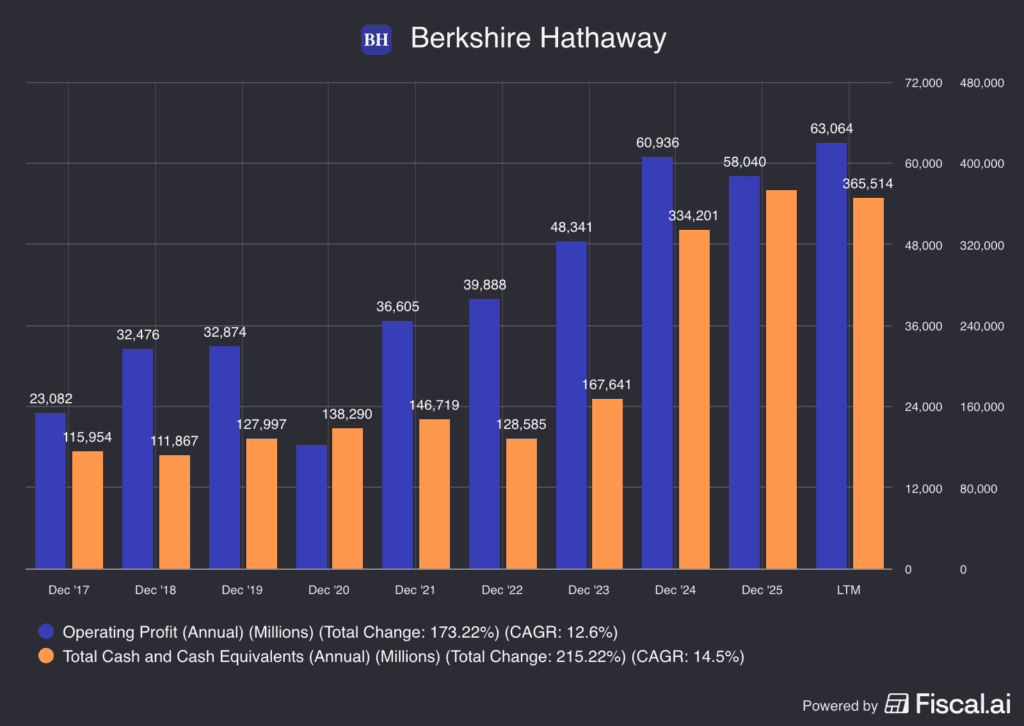
Insurance sits at the heart of Berkshire’s model, generating premiums that help provide capital the company can invest elsewhere. Berkshire also maintains a massive cash position, giving management considerable flexibility to acquire businesses, invest in securities, or repurchase shares.
For decades, Berkshire was almost synonymous with Warren Buffett. His fingerprints remain all over the company, but leadership has now shifted. Greg Abel became CEO at the start of 2026 and now oversees Berkshire’s major capital-allocation and investment decisions. Buffett stepped down as chairman in September, becoming chairman emeritus while remaining on the board, with Howard Buffett taking over as chairman. That succession makes Berkshire’s next chapter especially important as investors assess how the company evolves beyond the Buffett era.
Want to receive these insights straight to your inbox?
Diving Deeper
That makes capital allocation especially important in the post-Buffett era, as investors assess whether Berkshire’s disciplined approach can remain intact under Greg Abel.
Berkshire has historically been associated with price-to-book valuation, but that metric has become less useful as the company has evolved. Many operating businesses are carried below their potential economic value, while its massive stock portfolio and cash holdings add complexity. Buffett himself eventually moved away from book value as Berkshire’s primary measuring stick, arguing that intrinsic value mattered more.
The company is known for steady operations and a growing cash balance, with management willing to wait patiently for attractive opportunities before putting capital to work.
Analysts currently have a consensus price target of ~$584 on BRK.B stock, implying about 7.5% upside to today’s stock price.
Risks
Berkshire faces risks across its major businesses, including large insurance losses from natural disasters or other catastrophes, weaker freight demand at BNSF, and regulatory or capital-spending pressures at its utility and energy operations. Its large public-stock portfolio also creates market risk, particularly because Berkshire tends to concentrate significant amounts of capital in a relatively small number of holdings.
Leadership is another important consideration following Warren Buffett’s transition away from day-to-day control. Greg Abel now oversees Berkshire’s major capital-allocation and investment decisions, putting greater focus on how the company deploys its massive cash pile and preserves the disciplined culture built under Buffett. Berkshire itself identifies dependence on key personnel and capital allocation as material risks.
The Bottom Line
Berkshire Hathaway remains one of the market’s most durable businesses, backed by a diversified operating base, massive liquidity, and a long history of disciplined capital allocation. Bulls may see that combination as especially valuable in a more uncertain market environment, while bears may focus on the challenge of deploying such a large cash balance and the uncertainty that comes with the company’s transition beyond Warren Buffett.
Disclaimer:
Please note that due to market volatility, some of the prices may have already been reached and scenarios played out.