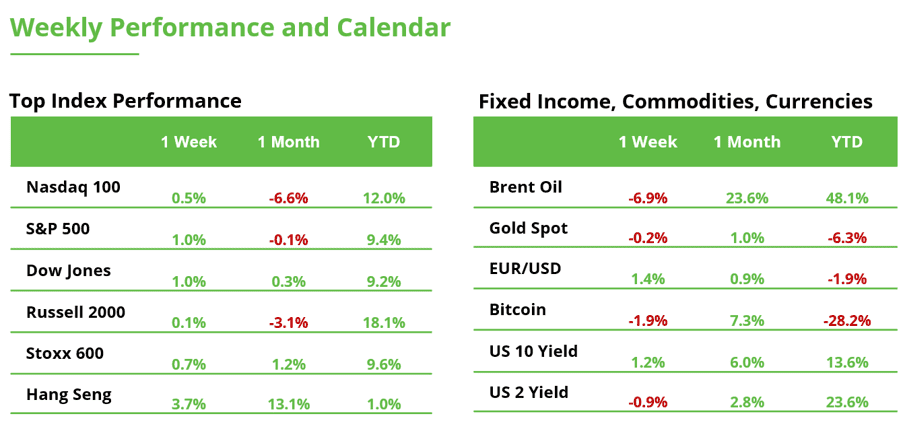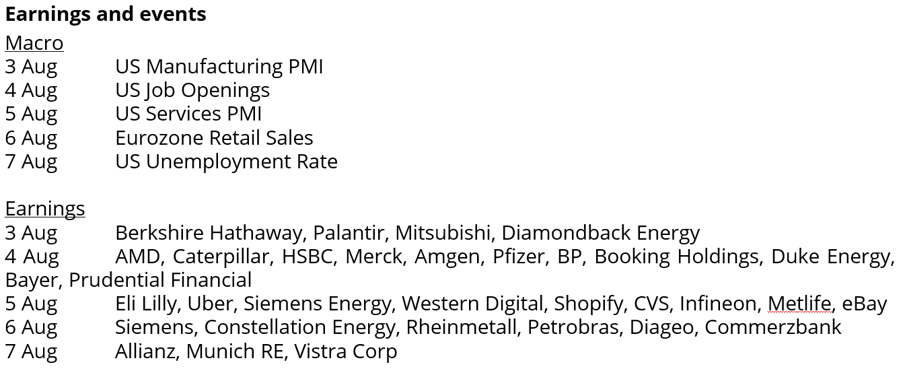



The past month has looked dramatic for semiconductors. Many of the world’s largest chip stocks have fallen 30% to 40%, erasing part of the extraordinary gains made earlier this year. Yet the earnings season has told a much calmer story.
Cloud providers continue to increase capital spending on AI infrastructure, demand for advanced computing remains strong and semiconductor companies have generally continued to deliver solid results. Share prices have corrected much faster than earnings expectations.
The explanation lies largely in positioning. AI had become one of the most crowded trades in global markets after a powerful rally through the second quarter. As volatility increased and investors reassessed the outlook for interest rates, leveraged positions were reduced and profit-taking accelerated. Selling pressure spread quickly across semiconductor stocks, even though the underlying earnings outlook changed little.
The forced selling now appears to be fading, but that does not necessarily mean the previous leaders will immediately return to their highs. Investor confidence typically rebuilds more slowly than positions unwind, particularly after periods of elevated leverage. A recovery driven by earnings rather than momentum is likely to be steadier than the one that preceded it.
Leadership is broadening
Perhaps the more important market development is what happened outside semiconductors.
Capital did not leave equities altogether. Instead, it rotated into sectors where earnings expectations have continued to improve but valuations remained less demanding. Financials, industrials, defence, energy and selected technology services all attracted renewed buying during the semiconductor correction.
That is consistent with a market moving into a broader phase of the cycle. Earlier this year, performance was concentrated in a relatively small group of AI hardware companies. More recently, investors have become willing to look beyond the obvious beneficiaries of artificial intelligence and towards businesses with improving fundamentals across a wider range of sectors.
We think that a broader market is generally a healthier one. It reduces dependence on a handful of companies and allows earnings growth from different industries to support overall equity performance.
Capital is becoming more selective
Another shift is taking place in credit markets.
Companies seeking to raise debt are facing more demanding investors. Borrowing costs have risen, lenders are asking for stronger protections and several large issuers have been forced to improve financing terms before completing transactions.
For equity investors, this is relevant for the investment backdrop.
During periods of abundant liquidity, markets often reward growth first and ask questions later. As financing becomes more expensive, balance sheet strength, cash generation and capital discipline become more important differentiators.
This is particularly relevant within the AI ecosystem. Companies with established businesses, resilient cash flows and the financial capacity to continue investing should remain well positioned. Businesses relying heavily on debt markets to finance expansion may face greater scrutiny if borrowing costs remain elevated.
What to watch next
The AI investment cycle continues to be supported by strong corporate spending on computing infrastructure. We do not think that has changed.
What has changed is market leadership.
The next leg of the equity rally may rely less on multiple expansion in semiconductor stocks and more on continued earnings growth across a broader set of industries. Financials remain well positioned if interest rates stay elevated. Industrial and defence companies continue to benefit from structural investment trends.
For long-term investors, this increasingly looks like a market where stock selection matters. The strongest opportunities are more likely to come from identifying businesses with durable earnings, sensible valuations and the financial strength to keep investing regardless of market sentiment.
SpaceX: First the Earnings, Then the Billion-Dollar Unlock
There is hardly another company that is currently as controversial among investors as SpaceX. While the quarterly earnings on August 4 are important, they could be overshadowed by another event: the expiration of the company’s first lock-up period.
The Billion-Dollar Unlock
On August 6, just two trading days after the earnings release, the first lock-up period expires. Early investors and employees will be allowed to sell part of their holdings for the first time. In an extreme scenario, shares worth several hundred billion US dollars could become available for trading. That would significantly increase the supply of freely tradable shares.
Although the end of the lock-up period has been known since the IPO and is therefore likely to be partially reflected in the share price, the actual selling pressure cannot be predicted. This is precisely why the quarterly results are likely to determine how willing shareholders are to sell. If the earnings disappoint, selling pressure could increase significantly. If SpaceX delivers strong results, the willingness to take profits is likely to decline.
The Downtrend Is Not Over Yet
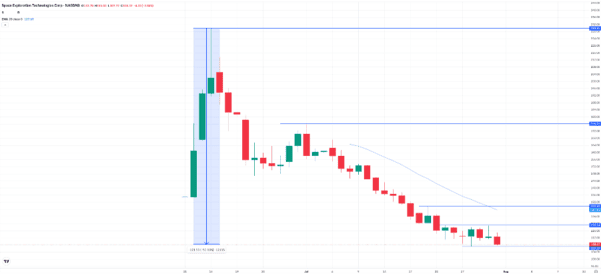
SpaceX shares have now lost more than half of their value from the all-time high. Such price swings are not uncommon after major IPOs. Reddit experienced a similar decline after its listing, while Meta fell more than 60% at one point and Uber more than 70%.
Last week, the stock declined another 5.8% to $108.40. It marked the fourth consecutive weekly loss and a new record low on a weekly closing basis. From a technical perspective, the chart continues to favor a continuation of the downtrend rather than a reversal. Investors should therefore be prepared for further lower lows. Anyone buying the stock at current levels should be aware that they are trading against the prevailing trend and accepting higher risk.
For the chart to improve, the stock first needs to break above the short-term resistance levels at $119 and $130. A breakout above those levels could mark the beginning of a new uptrend and improve the prospects for a broader recovery.
AMD
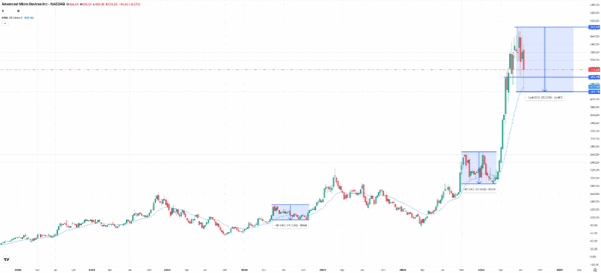
AMD shares have more than doubled this year, gaining an impressive 122%. The stock reached a record high above $584 at the end of June. Since then, however, profit-taking has increasingly weighed on the share price.
Last week, AMD lost 8.6% and closed at $476. During the week, the stock briefly fell to $420 before successfully defending its 20-week moving average and staging a rebound. As a result, the decline from the record high narrowed from 28% at its worst to around 19%. Once again, this highlights just how volatile AI stocks remain. Similar swings occurred at the end of 2025 and during 2023.
The focus now shifts to Tuesday’s second-quarter earnings report and updated guidance. Valuation alone suggests that expectations remain exceptionally high. AMD trades at a forward P/E ratio of more than 53, leaving little room for disappointment even by AI-sector standards.
Despite the recent correction, the long-term uptrend remains intact, leaving the door open for new record highs over time. In the short term, however, investors will be watching the support level at $456, the 20-week moving average at $432, and last week’s low at $420. If these levels fail to hold, investors should be prepared for a deeper short-term selloff.
Bitcoin has found buyers, but not a new trend
Bitcoin enters August trading around $63,000 after gaining 7.5% in July, yet the market still lacks the catalyst needed to confirm a sustained recovery.
The most encouraging development comes from institutional demand. Bitcoin ETFs have now spent two consecutive weeks in a neutral flow regime, meaning persistent selling pressure has faded and incoming demand is consistently absorbing available supply. That suggests the current price area is attracting buyers, even if it is not yet generating a new uptrend.
Two price levels now stand out. The first is the $63,000 region, where ETF flows indicate demand is providing support. The second is around $68,000, which represents the average purchase price of bitcoin over the past six months (STH). As long as bitcoin remains below that level, many recent buyers are still underwater, making it a key resistance zone. A decisive move above it would materially improve the market structure.
The macro backdrop, however, remains challenging as FED continues to reinforce a more hawkish stance. At the same time, the ongoing deleveraging across AI-related trades has increased the risk of broader cross-market volatility spilling over into digital assets.
Regulation is also back in focus. The CLARITY Act faces a critical legislative window, and any progress could improve sentiment toward crypto assets. Another delay, however, would likely keep regulatory uncertainty elevated.
For now, the message is straightforward: bitcoin appears to have established demand around current levels, but until it reclaims $68,000 and ETF inflows strengthen beyond neutral, this remains a stabilization phase rather than the beginning of a new bull trend.
Waiting for absolute certainty often means arriving late to the market, but moving ahead before the data supports the case also increases risk.