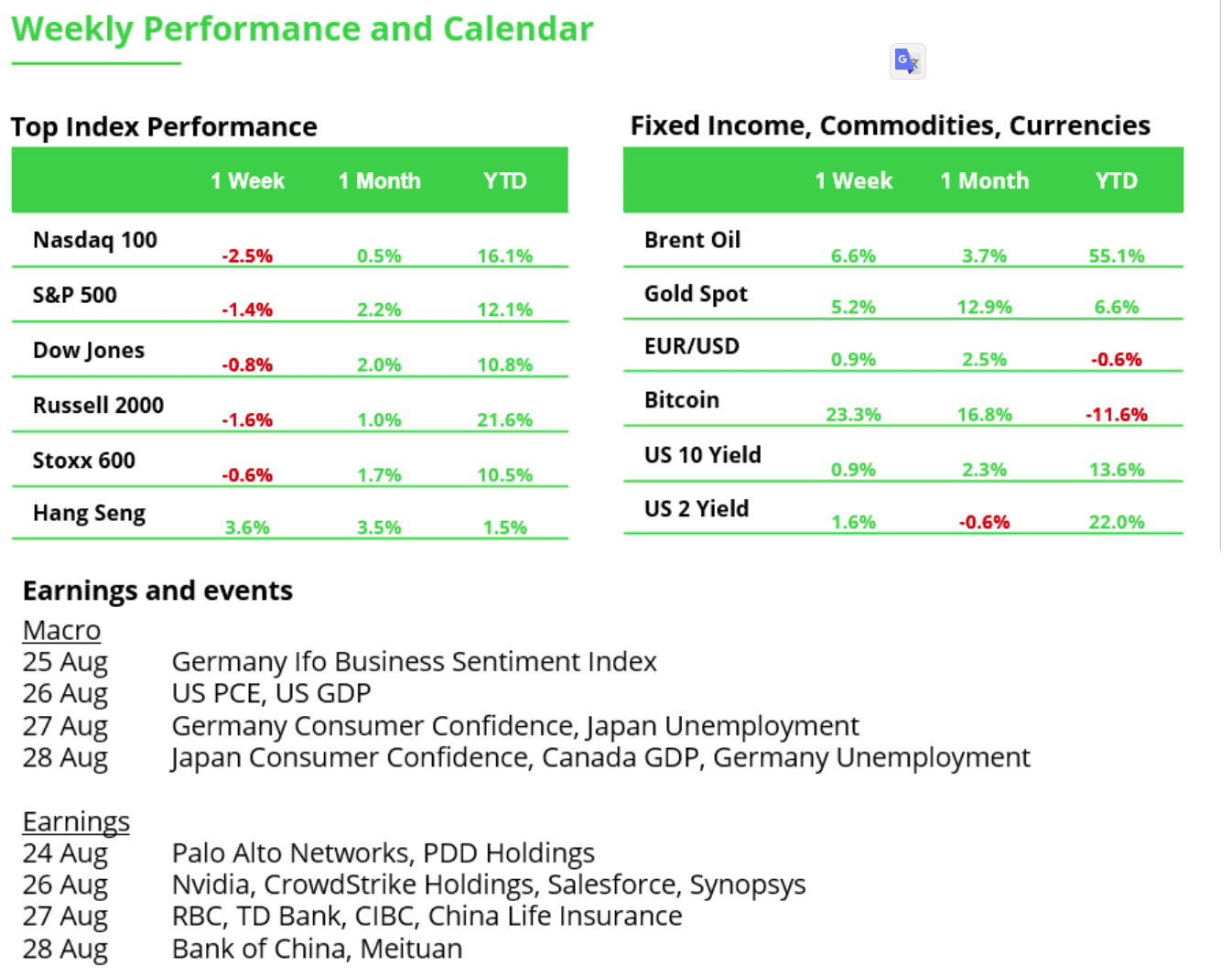



Gold has climbed to a three-month high as investors reassess the outlook for US government debt, interest rates and the dollar.
Why gold is rising again
The immediate trigger was the US Treasury’s decision to expand buybacks of long-dated government bonds. Buybacks remove some older debt from the market, which can improve liquidity and reduce the amount of long-term debt investors need to absorb.
However, long-term borrowing costs remain high. The 10-year Treasury yield is close to 4.75%, while the 30-year yield is above 5.25%, despite efforts to bring them down. Broader markets are not showing significant financial stress yet, but high yields and rising energy prices remain risks.
Gold usually benefits when bond yields and the dollar fall. The metal pays no interest, so it becomes relatively more attractive when returns on government bonds decline. A weaker dollar also makes gold cheaper for buyers using other currencies.
What stands out is that gold has continued rising even while long-term yields remain elevated. This suggests the rally is increasingly being driven by dollar weakness and concerns about US fiscal policy, rather than interest rates alone.
The credibility question
Treasury Secretary Scott Bessent is trying to reshape US borrowing by issuing more short-term bills and buying back some longer-dated bonds. This could flatten the yield curve and lower long-term financing costs, but it does not reduce the deficit or the government’s overall debt burden.
If investors see buybacks as an attempt to suppress yields without a credible plan to control borrowing, confidence in US bonds and the dollar could weaken. Gold may then become more attractive as an alternative store of value.
Fed’s credibility is also coming into focus. Markets need to believe that the Fed will continue fighting inflation, even if higher interest rates increase the government’s financing costs. Any sign that monetary policy is being influenced by fiscal pressures could provide another tailwind for gold.
What it means for portfolios
Gold can provide diversification when investors are concerned about inflation, dollar weakness or government debt. Renewed inflows into gold-backed ETFs suggest that investor demand is returning after several months of withdrawals.
There are still risks. Gold has already risen sharply this month, while higher oil prices could keep inflation elevated. If the Fed responds with higher rates, yields and the dollar could recover, putting short-term pressure on gold.
For asset allocation, gold is better viewed as a hedge than a source of income. Gold ETFs offer direct exposure, while mining shares can produce larger moves but also carry company-specific and stock-market risks.
The signal to watch is whether gold remains strong when long-term yields rise. Continued strength would suggest investors are hedging against a broader loss of confidence in US policy.
Nvidia: A beat may not be enough
What is driving earnings?
Nvidia is expected to report another strong quarter, supported by continued demand for its Blackwell chips and the first sales from its newer Vera Rubin platform. Revenue could reach around $94 billion to $95 billion, followed by guidance of roughly $107 billion to $108 billion for the next quarter.
Demand for computing power still appears to be running ahead of available supply. Nvidia is also selling more networking equipment alongside its chips, increasing the amount it earns from each AI data centre.
The Rubin transition
Investors will focus on how quickly Vera Rubin production can grow. Early shipments appear to be on schedule, but the larger increase is expected later in the year.
Blackwell demand should help Nvidia manage this transition. If early Rubin volumes are lower than expected, stronger Blackwell shipments could fill much of the gap. Improving supplies of advanced chip packaging and memory also support the potential for higher production in 2027.
Can AI spending remain this strong?
Demand is expanding beyond large US technology companies. AI cloud providers, governments and developers of advanced AI models are building their own infrastructure. South Korea and Japan have also announced major national AI plans.
Nvidia’s partnerships with six large financial institutions could help fund more than $500 billion of AI infrastructure. This could support demand, but investors will also ask whether customers can generate sufficient returns from these projects.
What could move the shares?
A small earnings beat may not be enough to produce a strong market reaction because expectations are already high. Investors will want evidence that Nvidia’s order book is still growing and that Rubin can support another large increase in revenue.
Profit margins will also matter. More expensive memory and manufacturing services could raise costs, so Nvidia must show that pricing and product mix can keep margins near 75%. Any meaningful recovery in sales to China would represent additional upside, as current expectations appear limited.
Investment takeaway
Nvidia’s growth outlook remains supported by tight chip supply, expanding AI investment and a strong product pipeline. The main risk is that spending by large technology companies slows before Nvidia delivers the earnings growth already expected by the market.
For retail investors, the important signals are Rubin production, order growth, profit margins and customer spending plans. The immediate share-price reaction may depend less on whether Nvidia beats this quarter’s forecasts and more on whether management increases confidence in growth through 2027 and 2028.
Bitcoin Changes the Odds, Not the Risks
The thesis
Bitcoin has moved from $62,000–63,000 to above $77,000 in just five sessions, briefly approaching $80,000. ETH has been even stronger, gaining close to 30% over the week.
The key takeaway is simple: there is enough new information to raise the probability that the worst may be behind us, but not enough to justify chasing price after a 22–23% rally.
What changed?
Three forces drove the move: a macro catalyst from US Treasury intervention in bond markets, improving regulatory expectations around the Clarity Act, and a major short squeeze, with $3–4bn of bearish positions liquidated in 48–72 hours.
What matters now is what comes next. Bitcoin has reclaimed its 200-day moving average and spot ETFs have returned to net inflows. Ethereum ETFs have attracted around $700m this week, while large holders have also been withdrawing ETH from exchanges.
In short:
Technical breakout + improving institutional flows + less selling pressure.
What hasn’t changed?
Volatility. Momentum indicators are stretched, with RSI above 80–90 in some timeframes, while part of the rally was driven by forced short covering rather than purely organic demand.
A consolidation — or even a meaningful pullback — would therefore not necessarily invalidate the improving setup.
The real test is whether demand remains after the short squeeze runs out of fuel.
Scenario map
↑ Bull: BTC breaks and holds above $80k, supported by continued ETF inflows. This would strengthen the case that $62–63k marked an important low.
→ Base: BTC consolidates while holding its 200-day MA and the broader $67–78k support area. This would help reset overbought conditions without damaging the recovery.
↓ Bear: ETF flows fade and BTC loses the 200-day MA again. That would suggest the rally was driven mainly by short covering rather than a structural change in demand.
For ETH, $2,400–2,500 remains the immediate area to watch.
What next?
After a 22% move in five sessions, less vertical price action should be expected. The important question is not whether Bitcoin corrects, but how it behaves during that correction.
Jackson Hole comes next, followed by the Clarity Act vote on 15 September and the start of the Treasury’s long-duration debt buyback programme. But the two most useful indicators remain simpler:
Price + ETF flows.
A week ago, Bitcoin was near $62k, ETF outflows dominated and demand was weak. Today, the technical structure has improved, institutional flows have returned and much of the forced selling has been cleared.
The bottom is not confirmed. But the evidence has changed — and probabilities should change with it.
For investors looking for broader exposure rather than individual crypto positions, relevant Smart Portfolios or PIs may offer a diversified way to access the theme, subject to their composition, concentration and risk profile.
Crypto assets are highly volatile and can experience significant price movements over short periods. The scenarios and levels above are analytical references, not forecasts or personalised investment advice. Past performance is not indicative of future results.