



Gold has long been recognised as both a store of value and a hedge against economic uncertainty. For Australian investors, gold is not just a global commodity but also a domestic resource, with major mines across Western Australia contributing significantly to global supply.
Gold can be a traded in a very similar way to other assets, including stocks, forex and crypto. Multi-asset brokerage accounts allow investors to hold a position in gold, which can potentially serve as a
Whether you are an experienced investor looking to use gold to rebalance your portfolio, or drawn to the intrinsic properties of gold as an investment, there are several options available when it comes to buying and investing in gold.

How to invest in gold
Gold is one of the most actively traded commodities worldwide, and Australians have several ways to gain exposure:
- Gold stocks: Shares in companies such as Newcrest Mining or Northern Star Resources, which are among the largest gold producers in the world. Their share prices are influenced by the global gold price and company performance.
- Gold ETFs: Exchange-traded funds listed on the ASX, such as GOLD (ETFS Physical Gold), which track the price of gold bullion.
- Gold futures:
Derivative instruments traded on commodity exchanges, often used by professional traders. - Gold Smart Portfolios: Professionally managed portfolios that invest in a basket of gold-related companies, providing diversified exposure.
- Physical gold: Buying bullion bars or coins from Australian dealers, or jewellery for those preferring tangible ownership.
There is no single “best” way to invest in gold. The choice depends on your personal goals, investment time
Tip: Investors choosing physical gold should also factor in the costs of storage and insurance over time.
Is gold a good investment?
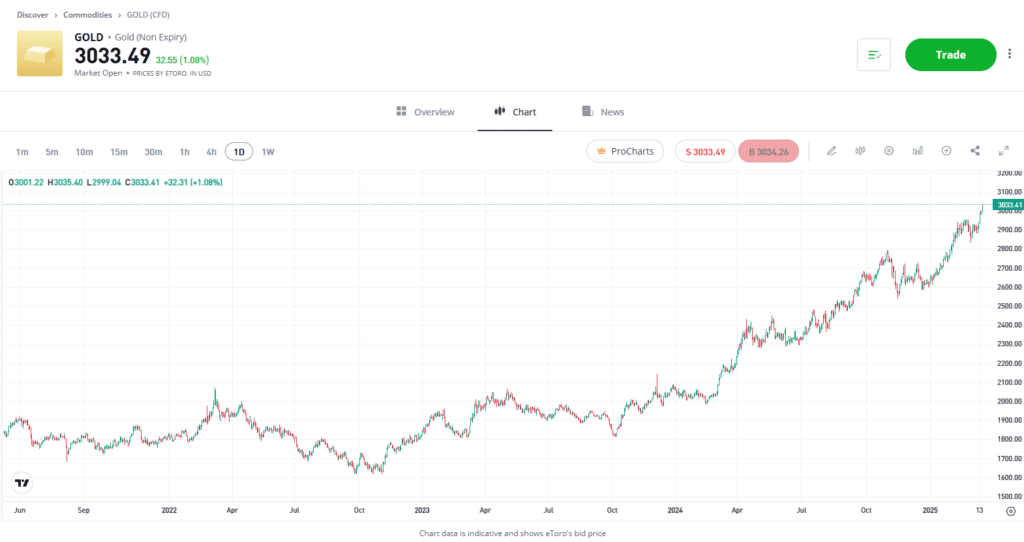
Unlike shares or bonds, gold does not pay dividends or interest. Returns come solely from price movements. For this reason, gold is often described as a defensive asset, used more for protection than growth.
Gold is traditionally sought during periods of high
Gold is considered a defensive investment, helping Australians preserve wealth during uncertain times.

How to trade gold
Some investors prefer active trading strategies rather than long-term holding. Short-term traders, such as day traders, focus on intra-day or weekly gold price movements.
Contracts for Difference (CFDs) are commonly used in Australia to trade gold. CFDs mirror the price of gold or related assets such as futures or stocks. They allow:
- Short selling: Speculating on falling prices.
- Leverage: Using borrowed capital to increase exposure, magnifying both risk and reward.
While CFDs offer flexibility, they also come with high risk. Traders must understand margin requirements and how losses can exceed initial deposits.
Tip: Leveraged trading with CFDs is not generally suitable for beginner or long-term investors.
What impacts the price of gold?
Several global and domestic factors affect the price of gold:
- Safe-haven demand: Investors typically move into gold during times of economic or market stress.
- Geopolitical risks:
Rising geopolitical tensions can drive gold demand higher. - US dollar strength: Gold usually has an inverse relationship with the US dollar—when the dollar strengthens, gold often weakens.
- Supply and demand: Gold supply is relatively
inelastic , as developing new mines takes years.
For Australian investors, the AUD/USD exchange rate also plays a crucial role. Even if global gold prices rise, a stronger Australian dollar can offset potential gains.

Benefits and risks of investing in gold
Gold, like all assets, offers both advantages and disadvantages.
| Benefits | Risks |
|
|
Final thoughts
Few Australian investors allocate their entire portfolio to gold. Instead, it is typically used as part of a diversified strategy, providing stability when riskier assets are underperforming. Gold is best viewed as a protective measure, not a source of high returns.
Visit the etoro Academy to learn more about gold and other precious metals.
Frequently Asked Questions
- What is the gold/silver ratio?
-
Analysts closely monitor the comparative values of gold and silver, as denoted by the gold/silver ratio, in an attempt to discern potential trading opportunities. While the prices of gold and silver have a strong positive correlation over the long term, the ratio of their prices can vary dramatically within shorter time frames.
- What is the difference between gold investing and gold trading?
-
The major difference between gold trading and gold investing is the lifespan of the transaction. Traders and investors can use the same strategies in the same markets, but trading involves a greater degree of commitment because traders need to continually monitor the market.
- What are the costs associated with holding physical gold positions?
-
The costs of holding physical gold positions will vary based on the method you adopt. If you hold the gold in physical form at home, storage costs are feasibly zero, although security might be a concern.
Storage fees at specialist bullion vaults are typically proportionate to the size of the holding, although this can add up for those holding gold for long periods. The challenges and costs associated with storing physical gold help to explain the presence of other financial instruments that enable exposure to the sector.