



Equity markets in the form of stock exchanges exist all over the world. They form a global ecosystem that helps businesses grow and investors build wealth. Once listed on an exchange, anyone can buy or sell shares of the company and these are the reasons why you might want to take that approach.
The equities market is where buyers and sellers come together to trade shares of companies. This article will explain the basics of the equity markets, how they work, and help you determine whether stock investing is right for your portfolio.
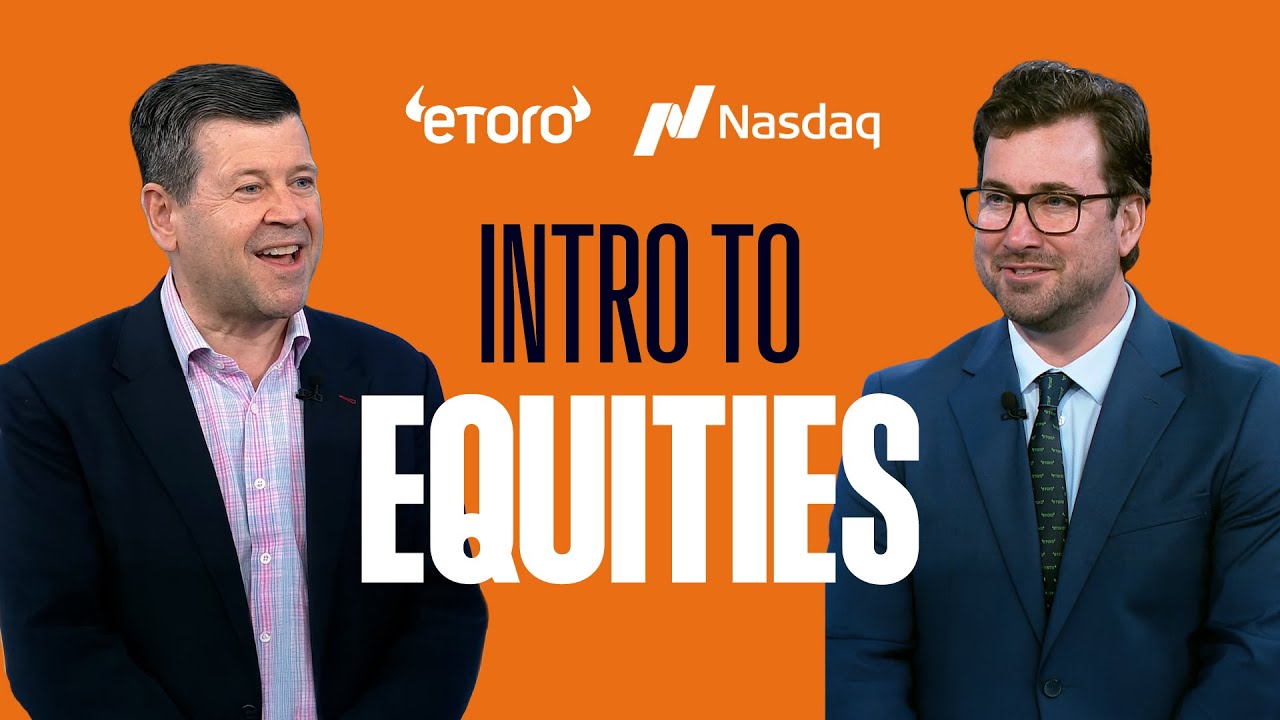
Learn more about Nasdaq and the equities markets with Brett Kenwell and Bob McCooey.
What are equities?
Equities, commonly referred to as stocks or shares, represent ownership in a company. When you buy a stock, you’re purchasing a small piece of that company. If the company becomes more successful and its value increases, your shares can become more valuable as well.
While you will be a part-owner of a company, your ability to influence decision-making will be determined by the number of shares you hold and the voting rights attached to them. Most investors are, therefore, minority shareholders with limited scope for determining the way companies they hold stocks in will operate.
Being a smaller shareholder means that from an investment perspective, you need to identify the type of company into which you will be buying. Some companies, for example, are known to share profits with shareholders by paying dividends, while others reinvest their profits to fund growth.

What is the equities market?
The equities market (or stock market) is a marketplace where stocks are bought and sold. Companies list their shares on stock exchanges to raise capital, and investors buy these shares to participate in the potential growth of those businesses.
The US equities market is made up of a network of venues that match buyers and sellers. In the US, it includes major exchanges like the New York Stock Exchange (NYSE) and Nasdaq® as well as smaller regional exchanges. In fact, there are 17 regulated exchanges in the US.
| Exchange Group | US Equity Exchange |
|---|---|
| Nasdaq | Nasdaq Stock Market® Nasdaq BX Nasdaq PSX |
| Intercontinental Exchange Group (ICE) | New York Stock Exchange (NYSE) NYSE ARCA NYSE National NYSE American NYSE Texas |
| Cboe | BZX BYX EDGX EDGA |
| IEX Group | Investors Exchange (IEX) |
| Long-Term Stock Exchange (LTSE) | Long-Term Stock Exchange (LTSE) |
| Members Exchange (MEMX) | MEMX Equities |
| Miami International Holdings | MIAX Pearl Equities |
Who can participate in trading stocks?
The main participants in the stock market include retail and institutional investors who engage in stock trading to generate an investment return; other parties such as brokers and market makers provide a service which helps stock markets to function effectively.

- Retail investors – individuals who are investing for their personal investment account.
- Institutional investors – Large firms such as mutual funds, pension funds, hedge funds.
- Market makers – Firms that continuously buy and sell stocks to ensure liquidity in the market.
- Brokers – Intermediaries that connect buyers and sellers, often through online trading platforms.
Tip: In the US, pay attention to regulatory filings like 13F reports for insights into what institutional investors are doing.
What determines a stock’s price?
Stock prices are driven by supply and demand. If more people want to buy a stock than sell it, the price usually goes up. If more people want to sell than buy, the price goes down.
Stock prices can fluctuate intraday and are affected by such factors as company performance, industry news, economic trends, and investor sentiment.

What drives investor sentiment?
Investor sentiment is driven by both societal factors, such as the impact of the global geopolitical landscape, as well as financial factors determined by market research and analysis.
- Rational sentiment is based on facts, such as a stock buyback or strong earnings reports.
- Irrational sentiment is based on intangibles such as fear or hype including geopolitical uncertainty or social media influencers. In worst case scenarios, this fear can lead to a herd mentality and can amplify market volatility or lead to price movements.
Tip: Monitor market activity to track stocks experiencing large trade volumes or extreme price moves.
How do you potentially make money in the stock market?
Two ways to potentially make money when investing in stocks include receiving dividend income and capital gains which occur when you anticipate increases in a stock’s value over time. These factors aren’t mutually exclusive and some stocks will offer both an income stream and capital growth.
- Dividends – Companies can choose to pay out profit to shareholders on a quarterly, semi-annual or annual basis. Investors can take the cash in hand or reinvest it to buy more shares and the total amount of dividend received will be based on how much stock an investor owns.
- Capital Appreciation – When the price of a stock increases after it is purchased by an investor.
EU disclaimer: Forecasts are not a reliable indicator of future performance
Tip: Remember, not all companies pay dividends, and stock prices can go up or down. Investing always carries risk.
What are the risks of investing in stocks?
There are many different types of risks when investing in stocks, but the main ones include market risk, company-specific risk, and economic risk.
- Market risk – When the overall market drops due to factors like inflation or geopolitical events.
- Company-specific risk – Issues specific to a business, such as poor earnings or bad management decisions.
- Economic risk – Broader factors such as recessions, inflation, and interest rate changes, which form part of the macroeconomic cycle and affect all companies.
Tip: Diversifying your investments (owning different types of stocks or sectors) can help to reduce risk.
Final Thoughts
When a company chooses to be publicly traded, it creates an opportunity for investors to own a share of that company. For new investors, the equities market can seem complex, but it’s a popular market due to the potential to build long-term wealth.
Maybe you want to invest in your favourite businesses or maybe you have an interest in a particular sector – just remember that there is always risk as past performance does not indicate future results.
To learn more about investing in the equities market, visit the eToro Academy.
Quiz
FAQs
- What’s the difference between a stock and a bond?
-
A stock represents ownership in a company, while a bond is a loan made to a company or government. Stockholders may benefit from price appreciation or dividends, while bondholders earn fixed-interest payments and are repaid principal at maturity.
- Do I need a lot of money to start investing in stocks?
-
No, many brokerages now offer fractional shares, allowing you to invest small amounts (even under $10) in large companies. You can start building your portfolio with modest contributions.
- How do I know which stocks to invest in?
-
Start by researching companies you understand and believe in. Look at their financial health, earnings growth, industry trends, and long-term prospects. Many beginners use index funds or ETFs to diversify while learning.
This information is for educational purposes only and should not be taken as investment advice, personal recommendation, or an offer of, or solicitation to, buy or sell any financial instruments.
This material has been prepared without regard to any particular investment objectives or financial situation and has not been prepared in accordance with the legal and regulatory requirements to promote independent research.
Not all of the financial instruments and services referred to are offered by eToro and any references to past performance of a financial instrument, index, or a packaged investment product are not, and should not be taken as, a reliable indicator of future results. The availability of all the above-mentioned products and services may vary by jurisdiction and country.
eToro makes no representation and assumes no liability as to the accuracy or completeness of the content of this guide. Make sure you understand the risks involved in trading before committing any capital. Never risk more than you are prepared to lose.
Nasdaq® is a registered trademark of Nasdaq, Inc. The information contained is provided for informational and educational purposes only, and nothing contained herein should be construed as investment advice, either on behalf of a particular security or an overall investment strategy. Neither Nasdaq, Inc. nor any of its affiliates makes any recommendation to buy or sell any security or any representation about the financial condition of any company. Statements regarding Nasdaq-listed companies or Nasdaq proprietary indexes are not guarantees of future performance. Actual results may differ materially from those expressed or implied. Past performance is not indicative of future results. Investors should undertake their own due diligence and carefully evaluate companies before investing. ADVICE FROM A SECURITIES PROFESSIONAL IS STRONGLY ADVISED. © 2025. Nasdaq, Inc. All Rights Reserved.